
How to Build a Bedtime Routine for 3 Year Olds That Actually Sticks

A bedtime routine for 3 year olds works best when the same few calming steps happen in the same order every night, wrapping up around 7:00 to 8:00 p.m. Consistency matters more than the exact activities, because a predictable routine helps toddlers feel secure and fall asleep faster.
Three year olds spend their days testing independence, and that same drive often shows up at bedtime as negotiating, wandering, and one more request for water. A calm, repeatable nighttime routine gives them the structure they want and shortens the nightly back-and-forth. It also protects the hours of sleep a preschooler needs to wake up steady and ready for the next day. Small, steady changes usually make the biggest difference at this age.
How Much Sleep Does a 3 Year Old Need?
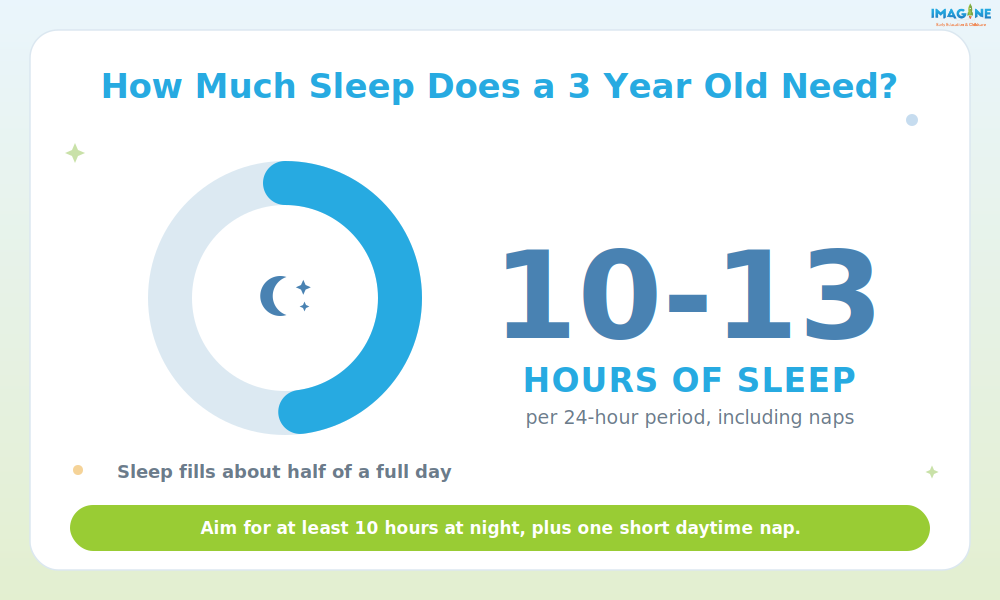
Most 3 year olds do best with 10 to 13 hours of sleep over a 24-hour period, including naps. Aiming for at least 10 hours of nighttime sleep is a good target for a typical toddler. An age-appropriate sleep schedule at this stage usually means an early bedtime and one short nap. A 3 year old needs more sleep than an older child, and toddler sleep needs still vary from child to child. Use your child’s mood and energy as your real guide.
Signs Your Child Is Getting Enough Sleep
A well-rested toddler wakes up on their own most mornings and stays fairly even through the afternoon. Watch for these signs that your child’s sleep may be running short:
- Hard morning wake-ups: A child who is tough to rouse most days may need an earlier bedtime.
- Late-day meltdowns: Frequent crankiness before dinner often points to not getting enough sleep.
- Falling asleep in the car: Dozing off on short drives can signal a sleep debt building up.
Where Daytime Naps Fit
Many 3 year olds still take one daytime nap of about an hour, while others begin dropping it. A simple naptime routine that mirrors the nighttime one makes the switch to sleep easier. Keep naps in the early afternoon. A nap that runs late or long can push back the child’s bedtime and set up a later bedtime battle.
What Does a Good Bedtime Routine for 3 Year Olds Look Like?
A strong toddler’s bedtime routine is short, calm, and repeatable. Twenty to thirty minutes is plenty. Each step signals that the day is ending and sleep comes next.
A Simple Bedtime Sequence
- Bath or wash-up: A warm bath relaxes the body and marks the start of wind-down.
- Pajamas and brushing teeth: These steps build healthy bedtime habits and good hygiene.
- Bedtime story: A short story offers quiet connection and settles an active mind.
- Comfort item and lights out. A stuffed animal and dim light help your child drift off.
Build In Quiet Time
Quiet time before lights out helps an active toddler shift into sleep mode. Dim the lights, lower your voice, and trade active play for calm activities like reading or gentle songs. This wind-down window is the part of the nighttime routine that does the heavy lifting.
How Do You Make a Bedtime Routine That Actually Sticks?
A consistent bedtime routine is what turns a good idea into a real habit. Children with a nightly routine slept about an hour longer each night than children who had no routine at all. Hold the same steps and the same consistent bedtime, even on weekends when you can.
Use a Routine Chart and Positive Reinforcement
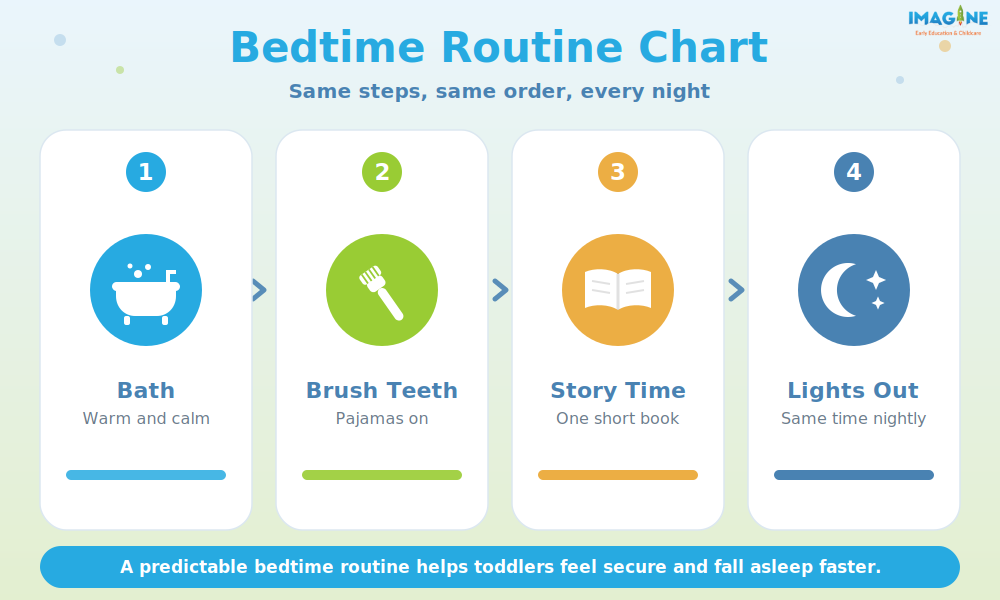
A bedtime routine chart with simple pictures lets your child see what comes next and take ownership of each step. Pair the routine chart with positive reinforcement like a sticker or calm praise. This turns bedtime into something your child helps run rather than something done to them.
Set the Sleep Environment
The room matters as much as the steps. A few adjustments support healthy sleep habits and better sleep:
- Turn off screens early: Stop screen time at least an hour before bed, because the light and stimulation delay sleep.
- Add white noise: A steady white noise machine covers household sounds and keeps nighttime sleep from breaking.
- Keep it cool and dark: A cool, dark room tells the body that it is time to rest.
How Do You Handle Bedtime Battles and Sleep Regression?
Even a solid routine hits rough patches at this age. Staying calm and consistent is how most bedtime problems pass.
Bedtime Battles and Stalling
Power struggles often show up as a stalling tactic like one more story or one more drink. Head this off by giving small choices within your limits, such as which pajamas or which book. Decide in advance how many stories you will read, then hold that line kindly. Giving a toddler a little control lowers the power struggles without handing over bedtime.
Separation Anxiety and Sleep Regression
Separation anxiety is common for a typical toddler and can make bedtime harder for a stretch. A stuffed animal or other comfort item gives your child something steady when you leave the room. If your child recently moved from a crib to a toddler bed, expect a short adjustment while they get used to the new freedom. A sleep regression, where a child who slept well suddenly resists, is usually temporary. Keep the routine steady, and consider a short sleep diary to spot patterns behind the sleep problems.
Imagine Early Education & Childcare: Routines That Help Kids Thrive

Predictable routines do more than smooth out bedtime. They give young children the security to explore, focus, and grow with confidence. At Imagine Early Education & Childcare, every classroom runs on consistent daily routines that help children feel safe, build independence, and know what comes next, the same qualities that make a bedtime routine work at home.
With centers across Texas, Oklahoma, and Colorado, Imagine serves children from six weeks through age twelve through hands-on learning and enrichment classes in art, music, STEAM, and more. Families stay connected to their child’s day through the Kindertales app. For a nurturing place where routine and learning grow together, schedule a tour to visit an Imagine classroom in person and meet the team that will care for your child.
Frequently Asked Questions
How much sleep does a 3 year old need?
Most 3 year olds need 10 to 13 hours of sleep in a 24-hour period, including naps. Aim for at least 10 hours of nighttime sleep, and use your child’s mood and energy as a second guide since sleep needs vary from child to child.
What time should a 3 year old go to bed?
A bedtime between 7:00 and 8:00 p.m. works for most 3 year olds who wake around 6:30 to 7:30 a.m. The exact child’s bedtime matters less than keeping it consistent every night.
How long should a bedtime routine for a 3 year old take?
A good toddler’s bedtime routine takes about 20 to 30 minutes. Keep it to a few calm steps in the same order, such as a bath, pajamas, brushing teeth, and a bedtime story.
Why does my 3 year old suddenly fight bedtime?
Sudden bedtime battles often come from a sleep regression, separation anxiety, or a nap that ran too late. Hold the routine steady, offer a comfort item, and adjust daytime naps if bedtime keeps slipping later.
Do 3 year olds still need a nap?
Many 3 year olds still take one short daytime nap, while others start dropping it. If naps push the child’s bedtime too late or cause bedtime battles, shorten the nap or move it earlier in the day.

Leave a Reply
Want to join the discussion?Feel free to contribute!